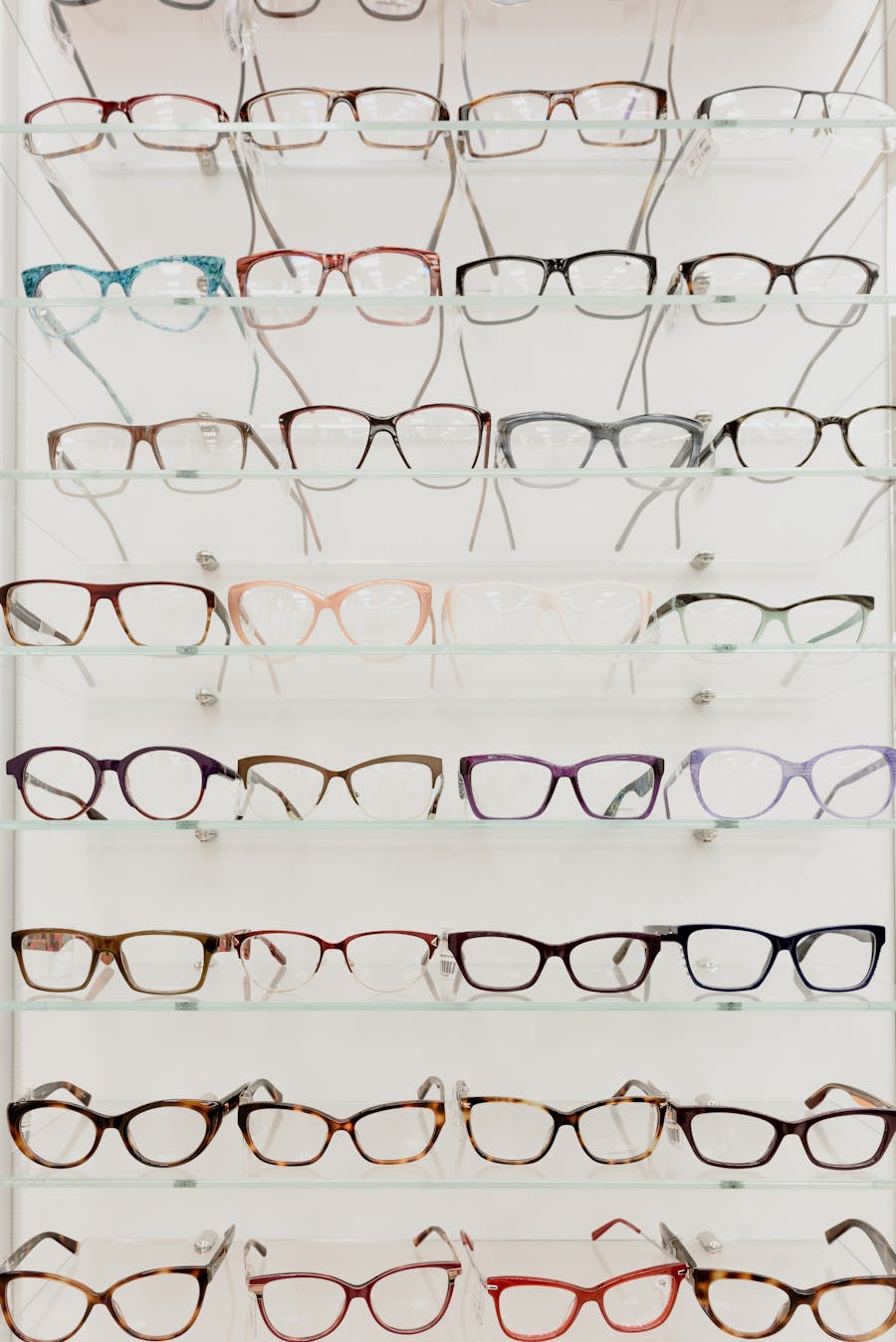
Quick answer: the biggest online glasses mistakes are entering the prescription too quickly, guessing PD, ignoring frame measurements, comparing frame price instead of finished price, choosing the wrong lens upgrades, misunderstanding delivery timing and assuming prescription glasses return like ordinary fashion items.
Buying glasses online can be excellent value in the UK, especially for simple single-vision prescriptions, spare pairs, readers and prescription sunglasses. The catch is that online ordering moves more responsibility onto the buyer. You need to understand what your prescription means, how your existing frames fit, which lens options matter, and what the retailer will or will not accept back once lenses are made.
That does not mean online ordering is risky for everyone. It means you should compare the whole order rather than the attractive starting price. A smart buyer checks the prescription, the measurements, the total order cost, the production time and the returns rules before clicking pay.
1. Entering the prescription too quickly
Most online glasses problems start with prescription entry. A glasses prescription may include sphere, cylinder, axis, prism, near add or intermediate add values. The plus and minus signs matter. The axis value matters. If one box is copied into the wrong field, the finished glasses can feel wrong even if the frame is perfect.
If your prescription is handwritten, old, incomplete or difficult to read, pause before ordering. Ask your optician for a printed copy or contact the retailer before checkout. A good retailer would rather clarify the prescription than make a pair that has to be queried later.
2. Guessing pupillary distance
Pupillary distance, usually shortened to PD, helps position the optical centre of each lens in front of your pupils. Some people have one single PD measurement. Others may need separate right and left measurements. Accuracy becomes more important with stronger prescriptions, larger frames and multifocal lenses.
Guessing PD is one of the easiest ways to spoil an otherwise sensible order. If a retailer asks for PD and you do not have it, use its measurement tool carefully or ask whether it can help. Do not use a random average just to get through checkout.
3. Judging frame fit from photos only
Product photos show style, not fit. The same frame can look neat on one face and oversized on another. Before ordering, compare the frame measurements with a pair you already wear comfortably. The most useful numbers are lens width, bridge width and arm length.
Frame fit also affects lens performance. A frame that sits too low, too wide or too far from the eyes can make the lenses feel less comfortable. This matters more for stronger prescriptions and multifocal lenses.
| Measurement | Why it matters |
|---|---|
| Lens width | Affects overall frame size and how thick stronger lenses may appear. |
| Bridge width | Helps determine whether the frame sits securely on your nose. |
| Arm length | Can affect whether the frame grips comfortably behind the ears. |
4. Comparing the frame price instead of the total order cost
The cheapest advertised frame can become less competitive once lenses are added. Lens thinning, anti-reflection coating, scratch-resistant coating, blue-light options, tints, polarisation, photochromic lenses, varifocals and delivery all change the final price.
To compare fairly, build the same basket at two or three retailers. Use the same frame type, prescription, lens thickness, coating and delivery option. Only then can you judge whether the discount is meaningful.
5. Choosing a large frame with a strong prescription
Large frames can look great, but they often make thicker lenses more visible. If you have a stronger prescription, a smaller or rounder frame may keep the lens edge neater and reduce the need for expensive thinning. This is especially relevant if you are buying online without an optician helping you choose frame size.
If you are paying for high-index lenses, ask whether the frame shape is working for or against you. Sometimes a smaller frame saves more than an upgrade.
6. Ignoring delivery and production timing
Online glasses are often made to order. The dispatch estimate may depend on prescription strength, lens type, coatings, stock availability and whether the order needs extra checks. Prescription sunglasses, varifocals, reglazing and complex prescriptions can take longer than a simple single-vision pair.
If you need glasses urgently, compare production time before comparing price. A retailer with a lower basket may still be the wrong choice if the pair will not arrive when you need it.
7. Assuming prescription returns work like normal fashion returns
Prescription glasses are custom-made. Some retailers offer generous guarantees, but the rules are not always the same as returning an unworn jacket or pair of shoes. Check whether returns differ for prescription lenses, sale frames, reglazing, sunglasses, readers or accessories.
Read the policy before ordering, not after the glasses arrive. Look for the return window, whether postage is covered, whether made-to-order lenses are excluded, and what happens if the prescription was entered incorrectly.
A better pre-checkout routine
- Confirm your prescription is current and entered in the correct fields.
- Measure or confirm PD rather than guessing.
- Compare frame measurements with a pair you already like.
- Build the total order cost, including lens upgrades and delivery.
- Check production estimates for your exact lens type.
- Read the returns rules for prescription lenses, not just general returns.
- Use in-person optician support for complex prescriptions or fitting-sensitive orders.
Frequently asked questions
Is it safe to buy prescription glasses online?
It can be a sensible option for many straightforward prescriptions, but it depends on accurate prescription entry, good frame measurements and using the right retailer for the job. Complex prescriptions and fitting-sensitive lenses may still be better handled with optician support.
What is the biggest online glasses mistake?
The biggest mistake is treating the frame price as the full price. The finished pair includes prescription lenses, coatings, thinning, delivery and return risk, so the total order cost is the number that matters.
Where to go next
If you want the lowest sensible basket, start with the cheap prescription glasses guide. If fit confidence matters, compare retailers with home trial or store support in the online glasses retailer comparison. If you already own frames you love, read the reglazing guide before posting them away.