

Free PD Estimator & Lens Helper

Not sure what your glasses prescription means or how to measure your pupillary distance (PD)? Our free tool explains your prescription in simple terms, estimates your PD, and recommends the best lenses for your needs.
Why Pupillary Distance (PD) Matters
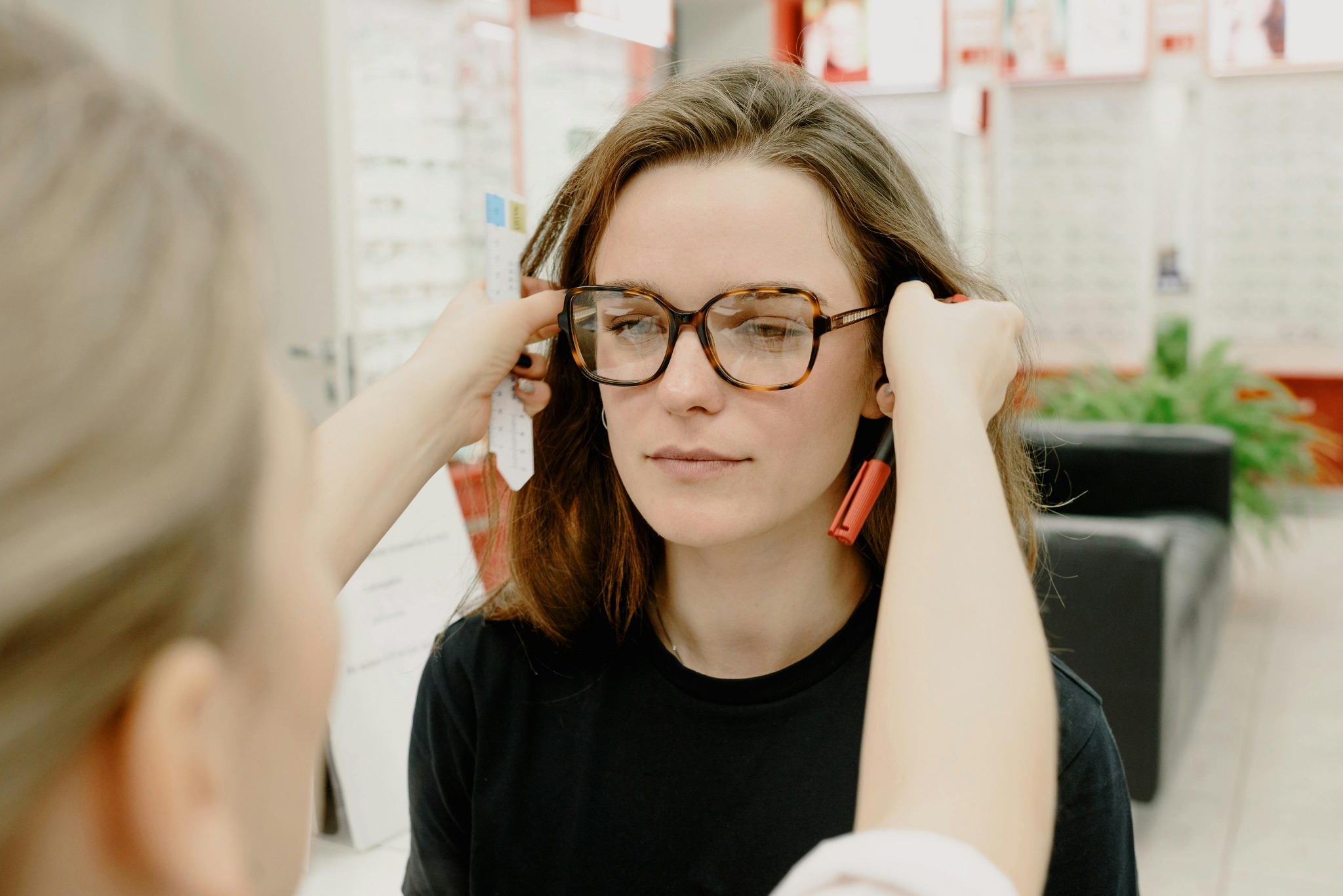
Pupillary distance (PD) is the measurement in millimetres between the centres of your pupils. Getting this number right is essential: it ensures your lenses are perfectly aligned with your eyes, reducing eye strain and giving you sharp, comfortable vision. Many UK opticians don’t always include PD on prescriptions — that’s where our free PD Estimator & Lens Helper can help you.
How This Tool Helps You
- ✔ Explains your glasses prescription in plain English.
- ✔ Estimates your PD if you don’t know it.
- ✔ Recommends whether you need single vision, varifocal, reading, or blue light lenses.
- ✔ Suggests affordable glasses that suit your needs.
🔧 PD & Lens Helper Tool
Common Questions About PD & Prescriptions in the UK
How do I read my glasses prescription?
Your prescription includes values such as SPH (sphere), CYL (cylinder), Axis, and sometimes ADD. These numbers can look confusing, but our tool translates them into everyday language. For example, SPH shows whether you are short-sighted or long-sighted, CYL shows astigmatism, and ADD indicates whether you need varifocals.
What if I don’t know my PD?
Don’t worry — this is very common in the UK. Our tool estimates PD using reliable averages based on your age and gender. This ensures your lenses will be positioned as accurately as possible if your optician hasn’t given you the measurement.
Which lenses should I choose?
Single vision lenses are ideal for either distance or reading. If your prescription includes an ADD, varifocals may be the best choice so you can use one pair for everything. Stronger prescriptions often benefit from thinner, lighter lenses, while coatings like blue light filters or anti-reflective finishes can improve comfort.
About This Tool
This free PD Estimator & Lens Helper has been created to make buying glasses online in the UK easier. While we are not a substitute for a professional optician, the explanations are based on standard UK prescription guidelines and average pupillary distances. Always double-check with your optician if you are unsure.

